The Economic Recovery Tax Act of 1981 established the Accelerated Cost Recovery System (ACRS) for property placed in service after 1980 and the Tax Reform Act of 1986 established the Modified Accelerated Cost Recovery System (MACRS) for property placed in service after 1986. Under ACRS and MACRS, the cost of most tangible, depreciable property are recovered over predetermined periods generally unrelated to and shorter than useful lives. The recovery deduction for each year is determined by applying a percentage specified in the law to the unadjusted basis of the property. By now, there are probably not too many assets around that predate the MACRS methodology.
Contractors need to keep in mind that ACRS/MACRS was created for income tax purposes and not financial reporting purposes. It would be very unusual to find ACRS/MACRS depreciation methods used in any audited financial statements. FAR 31.205-11(c) ties the allowability of depreciation for Government contract costing purposes to "financial reporting" purposes. It provides that ACRS/MACRS is acceptable for contract costing if the method is used for financial accounting purposes.
Many small Government contractors do not prepare audited financial statements and therefore have no benchmark for determining the depreciation method applicable to their contract(s). Some simply pluck the amount from the most convenient source and that source is the tax return. The tax return however is focused on minimizing tax liability and not the realistic useful lives of assets.
In reviewing forcasted or actual indirect expense rates, auditors will usually make inquiries into the depreciation methodology used, if depreciation expense is a significant element of the indirect cost pool being reviewed. Contractors who are using ACRS/MACRS for Government contract costing purposes need to adjust their practices to comply with FAR 31.205-11.
Friday, February 17, 2012
Depreciation using ACRS/MACRS
Labels:
depreciation,
FAR 31.205-11
Thursday, February 16, 2012
DCAA to Establish Milestone Plans for Audit Performance
A few years ago in the wake of the whistle-blower scandal and ensuing Congressional hearings that ultimately toppled its Director, the Defense Contract Audit Agency jettisoned most of the metrics it used to manage audits. The fallout from this was absolutely brutal. The Agency lost most of its credibility and goodwill. The number of audit reports issued dropped precipitously as the Agency no longer seemed to care what the "customer" wanted or needed. In some cases, Judge's orders were required to make DCAA issue audit reports. PCOs and ACOs (Procurement and Administrative Contracting Officers) were not being served and became vocal in their displeasure. As a result, DoD began transferring to other agencies much of DCAA's traditional workload (most pricing audits, financial capability reviews, purchasing system reviews, EVMS reviews, direct billing authorizations, to name a few. Adding additional auditors to chase fewer and fewer audits did not seem to help the Agency to publish audits any quicker.
DCAA management was not oblivious to this demise but its reaction to accusations from oversight agencies like the GAO (General Accountability Office) or the DoD Office of Inspector General) who found that DCAA's audits were "inadequate"caused the Agency it to add appreciably more internal oversight to the audit process (and correspondingly more audit effort and time). The junkyard dog mentality that once characterized Agency personnel has been replaced with John and Jane Milquetoast. Some of us wonder if the bell is about to toll for this once proud fighter for the taxpayer.
To try and put some sanity back into the audit process, DCAA just announced a new policy that will require its auditors to establish milestone plans for various audits. Milestone plans, according to the policy, " ... are intended to be a useful audit management tool that assist the audit team in successfully accomplishing its audit by a realistic due date. Good milestone plans provide a visual document to manage work flow and assist in meeting common objectives. A well-developed milestone plan also will allow the audit team to recognize when established due dates are no longer achievable or increased staffing is required to meet the due date."
There are a number of criteria that need to be considered by the audit staff when developing milestone plans. One of those criterion that should resonate with the contracting community is a requirement to consider the contracting officer's needs when establishing due dates. There's another requirement to explain, justify, and document when milestone dates are missed, not because some individual messed up but so the "process can be improved" - its always the process, never the individual that is to blame.
We do not hold out hope that this policy is going to expedite the issuance of audit reports. The Agency needs more than just a new policy, a flavor of the month, or more faddish fluff. It needs someone or something that will rebuild auditor confidence, courage, and boldness; confidence in knowing they have the knowledge, skills and abilities to conduct professional audits, courage to not care when some picayune oversight agency finds that it forgot to dot an "i" or cross a "t", and boldness in defending sound audit positions.
You can read the new policy here.
DCAA management was not oblivious to this demise but its reaction to accusations from oversight agencies like the GAO (General Accountability Office) or the DoD Office of Inspector General) who found that DCAA's audits were "inadequate"caused the Agency it to add appreciably more internal oversight to the audit process (and correspondingly more audit effort and time). The junkyard dog mentality that once characterized Agency personnel has been replaced with John and Jane Milquetoast. Some of us wonder if the bell is about to toll for this once proud fighter for the taxpayer.
To try and put some sanity back into the audit process, DCAA just announced a new policy that will require its auditors to establish milestone plans for various audits. Milestone plans, according to the policy, " ... are intended to be a useful audit management tool that assist the audit team in successfully accomplishing its audit by a realistic due date. Good milestone plans provide a visual document to manage work flow and assist in meeting common objectives. A well-developed milestone plan also will allow the audit team to recognize when established due dates are no longer achievable or increased staffing is required to meet the due date."
There are a number of criteria that need to be considered by the audit staff when developing milestone plans. One of those criterion that should resonate with the contracting community is a requirement to consider the contracting officer's needs when establishing due dates. There's another requirement to explain, justify, and document when milestone dates are missed, not because some individual messed up but so the "process can be improved" - its always the process, never the individual that is to blame.
We do not hold out hope that this policy is going to expedite the issuance of audit reports. The Agency needs more than just a new policy, a flavor of the month, or more faddish fluff. It needs someone or something that will rebuild auditor confidence, courage, and boldness; confidence in knowing they have the knowledge, skills and abilities to conduct professional audits, courage to not care when some picayune oversight agency finds that it forgot to dot an "i" or cross a "t", and boldness in defending sound audit positions.
You can read the new policy here.
Labels:
DCAA watch
Wednesday, February 15, 2012
Economic Planning Costs
Economic planning costs are the costs of general long range management planning that is concerned with the future overall development of the contractor's business and that may take into account the eventual possibility of economic dislocations or fundamental alterations in those markets in which the contractor currently does business.
According to FAR 31.205-12, economic planning costs are allowable under Government contracts. However, FAR cautions that allowable economic planning costs do not include organization or reorganization costs which are generally unallowable under FAR 31.205-38. Often times, the distinction between allowable economic planning costs and unallowable planning for the organization or reorganization of the corporate structure of a business (including mergers and acquisitions) is not very clear making this area a frequent source of dispute between contractors and Government auditors.
There are a couple of things contractors can do to minimize disputes. Contractors anticipating to incur significant economic planning costs can pursue an advance agreement with the contracting officer prior to incurring the costs. Whether the contracting officer is amenable to an advance agreement or not, documentation is very important to the process. The activities covered by this cost principle should be tied back to the definition of economic planning costs thereby leaving little room for "interpretation".
According to FAR 31.205-12, economic planning costs are allowable under Government contracts. However, FAR cautions that allowable economic planning costs do not include organization or reorganization costs which are generally unallowable under FAR 31.205-38. Often times, the distinction between allowable economic planning costs and unallowable planning for the organization or reorganization of the corporate structure of a business (including mergers and acquisitions) is not very clear making this area a frequent source of dispute between contractors and Government auditors.
There are a couple of things contractors can do to minimize disputes. Contractors anticipating to incur significant economic planning costs can pursue an advance agreement with the contracting officer prior to incurring the costs. Whether the contracting officer is amenable to an advance agreement or not, documentation is very important to the process. The activities covered by this cost principle should be tied back to the definition of economic planning costs thereby leaving little room for "interpretation".
Labels:
economic planning costs,
far 31.205-12
Tuesday, February 14, 2012
H.R. 1540 - Employee Compensation
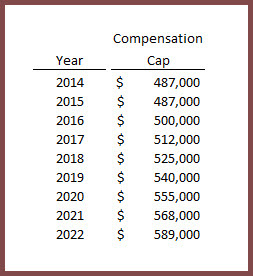
Last December 31st, President Obama signed into law, H.R. Bill 1540, the National Defense Appropriations Act for Fiscal Year 2012. With respect to compensation, the salary cap that was heretofore applied to the five most highly compensated employees in management positions at each home office and each segment of the contractor (see FAR 31.205-6(p)), was broadened to cover "any contractor employee" The cap is set annually by the Office of Federal Procurement Policy (OFPP). The current cap is $ 693,951. This cap covers the total amount of wages, salary, bonuses, deferred compensation and employer contributions to defined contribution pension plans.
The new law includes an escape clause for certain targeted positions. It states that the Secretary of Defense may establish one or more narrowly targeted exceptions for scientists and engineers upon a determination that such exceptions are needed to ensure that the Department of Defense has continued access to needed skills and capabilities. Look for upcoming guidance in the DoD FAR Supplement (DFARS) on how to make such requests.
The effective date for this section of the law is January 1, 2012 and applies to all " ... contracts entered into before, on, or after the date of the enactment of this Act."
In making this change, Congress was swayed by the fact that DCAA (Defense Contract Audit Agency) had shown that there are lower-level executives not subject to the cap and non-executive employees who receive compensation in excess of the benchmark compensation amount. Congress believes that this section would reduce the risk of excessive individual compensation charged to defense contracts.
Most contractors - especially small contractors - will be unaffected by this cap. $694 thousand is a lot of money. That would not have been the case if other proposals had won out. One would have limited compensation to $200 thousand and another to $400 thousand. Contractors who are affected by this cap need to be sure to record excess amounts to an unallowable account to avoid penalties for claiming unallowable costs.
Happy Valentine's Day.
The new law includes an escape clause for certain targeted positions. It states that the Secretary of Defense may establish one or more narrowly targeted exceptions for scientists and engineers upon a determination that such exceptions are needed to ensure that the Department of Defense has continued access to needed skills and capabilities. Look for upcoming guidance in the DoD FAR Supplement (DFARS) on how to make such requests.
The effective date for this section of the law is January 1, 2012 and applies to all " ... contracts entered into before, on, or after the date of the enactment of this Act."
In making this change, Congress was swayed by the fact that DCAA (Defense Contract Audit Agency) had shown that there are lower-level executives not subject to the cap and non-executive employees who receive compensation in excess of the benchmark compensation amount. Congress believes that this section would reduce the risk of excessive individual compensation charged to defense contracts.
Most contractors - especially small contractors - will be unaffected by this cap. $694 thousand is a lot of money. That would not have been the case if other proposals had won out. One would have limited compensation to $200 thousand and another to $400 thousand. Contractors who are affected by this cap need to be sure to record excess amounts to an unallowable account to avoid penalties for claiming unallowable costs.
Happy Valentine's Day.
Labels:
compensation,
far 31.205-6(p)
Monday, February 13, 2012
Contingency due to Currency Exchange Rate Fluctuations
A contractor recently included escalation based on forecasted changes in the currency exchange rate between the country in which the work was going to be performed and the US Dollar. In other words, the contractor would be incurring costs in a foreign currency but reimbursed by the Government in US Dollars. In order to protect itself against a potential increase in the foreign currency relative to the US Dollar, the contractor added costs based on projected changes in the foreign exchange rate. DCAA (Defense Contract Audit Agency) questioned this forecast as an unallowable contingency under FAR 31.205-7. DCAA was correct in its application of this cost principle, in our opinion.
FAR 31.205-7 defines contingencies as a possible future event or condition arising from presently known or unknown causes, the outcome of which is indeterminable at the present time. Contingencies with estimates of future costs fall into two categories:
Costs that may arise from presently known and existing conditions, the effects of which are foreseeable within reasonable limits of accuracy. These are typically allowable.
Costs that may arise from presently know or unknown conditions, the effect of which cannot be measured so precisely as to provide equitable results to the contractor and to the Government. These should be be excluded from cost estimates.
Foreign exchange rates definitely fall into the later category and should not be included in a proposal. (If a Government contractor was able to forecast exchange rate fluctuations with reasonable accuracy, they are definitely in the wrong business). However, there are other contracting vehicles available to protect contractors in such situations. Contracting officers are able to develop a special clause that would address currency exchange adjustments. Usually such clauses swing both ways, protecting the Government's interests as well as the contractor's, depending on which way the currency fluctuates. If you encounter a situation such as this, be sure to discuss the possibility of including such a clause in your contract.
FAR 31.205-7 defines contingencies as a possible future event or condition arising from presently known or unknown causes, the outcome of which is indeterminable at the present time. Contingencies with estimates of future costs fall into two categories:
Costs that may arise from presently known and existing conditions, the effects of which are foreseeable within reasonable limits of accuracy. These are typically allowable.
Costs that may arise from presently know or unknown conditions, the effect of which cannot be measured so precisely as to provide equitable results to the contractor and to the Government. These should be be excluded from cost estimates.
Foreign exchange rates definitely fall into the later category and should not be included in a proposal. (If a Government contractor was able to forecast exchange rate fluctuations with reasonable accuracy, they are definitely in the wrong business). However, there are other contracting vehicles available to protect contractors in such situations. Contracting officers are able to develop a special clause that would address currency exchange adjustments. Usually such clauses swing both ways, protecting the Government's interests as well as the contractor's, depending on which way the currency fluctuates. If you encounter a situation such as this, be sure to discuss the possibility of including such a clause in your contract.
Labels:
contingencies,
FAR 31.205-7
Subscribe to:
Posts (Atom)